🥶
✅ HelpfulEmergency Preparedness
Frozen Pipes — Thawing Safely
When temperatures drop below freezing, exposed pipes can freeze. The real danger is when they thaw — ice expands when it freezes and can crack the pipe, and the leak only appears when it melts.
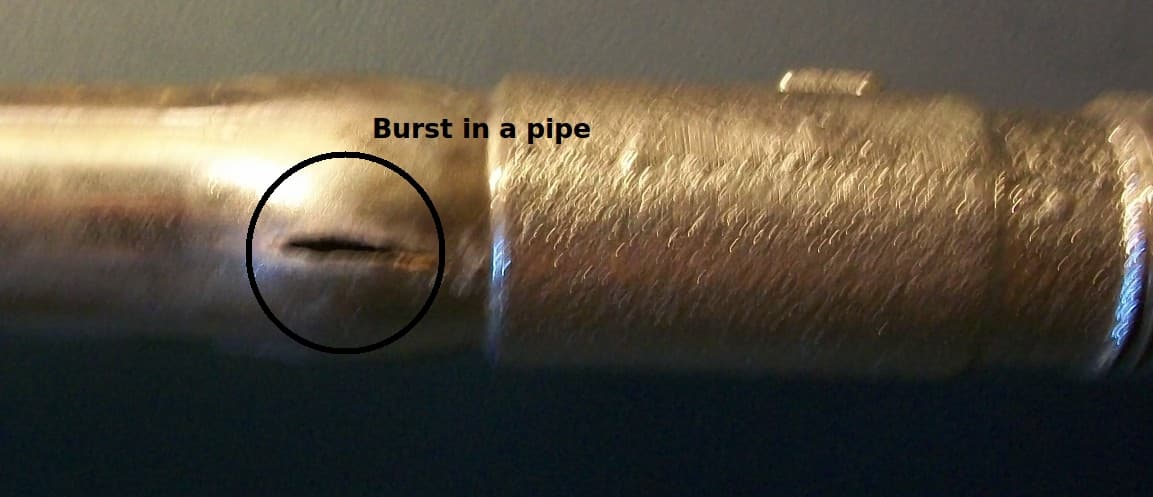 CC BY-SA 3.0
🔍 How to tell if a pipe is frozen
No water from a specific tap or group of taps after a cold night. The boiler may show a fault code if the condensate pipe has frozen — common in modern boilers. The affected pipe or area around it may be visibly frosted.
🌡️ How to thaw it safely
Turn off the main stopcock first — so if the pipe has cracked, water won't flood when it thaws.
Apply warm (not boiling) water with a cloth around the frozen section. Work from the tap end toward the stopcock. A hairdryer on a low setting works well. Never use a blowtorch.
For a frozen condensate pipe: Pour warm water over the external section and the boiler will usually restart after a reset.
🛡️ Prevention
Insulate all pipes in unheated spaces — loft, garage, external walls. Keep heating on low during cold spells even when away. Drain outdoor taps before winter and close their indoor isolation valves.
After thawing: Always check carefully for any signs of cracking or weeping at joints. A pipe that has frozen may be weakened even if it didn't visibly crack.
Was this helpful?
General guidance only — not a substitute for professional advice. Always consult a qualified engineer if you are unsure. Gas work must only be carried out by a Gas Safe registered engineer. Unvented (pressurised) hot water systems must be worked on by a G3-qualified engineer. We accept no liability for any loss, damage, or injury arising from the use of this information.
Up next in Emergency Preparedness
Burst Pipe Emergency — what to do right now