🌡️
⭐ EssentialValves & Stopcocks
TRVs — What They Do and Why They Seize
TRVs are the valves fitted to most radiators that automatically regulate hot water flow based on room temperature. They're the most common source of "my radiator isn't heating" calls — and most of the time the fix takes 30 seconds.
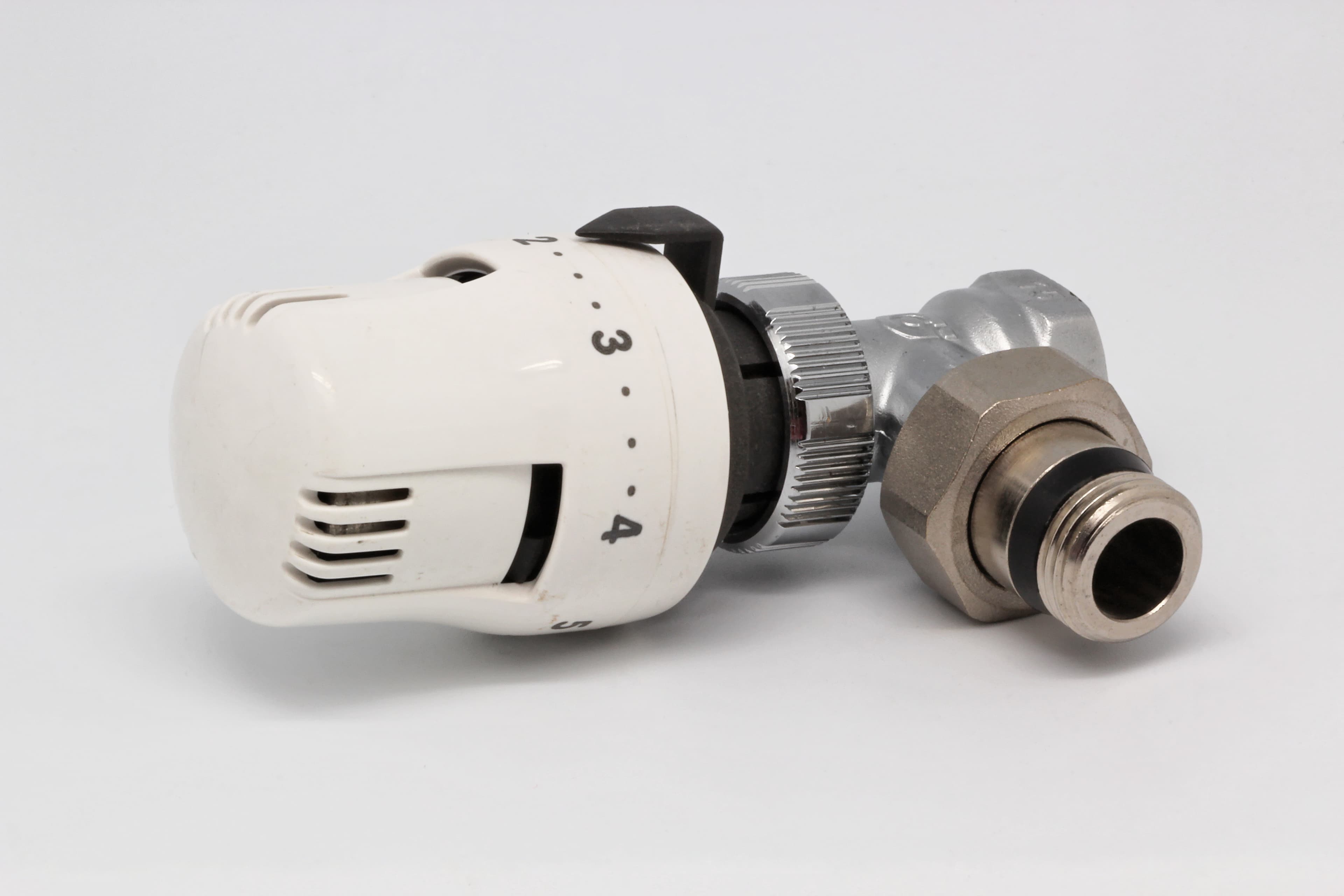 CC BY-SA 3.0
🔍 What a TRV looks like
A TRV is the larger of the two valves at the bottom of your radiator. It has a numbered head (1–5, with a snowflake symbol for frost protection). The numbers aren't degrees — they're settings. 3 is typically around 20°C.
⚙️ How they work
Inside the head is a wax capsule that expands as the room warms, pushing down a small pin inside the valve body, reducing hot water flow. When the room cools, the capsule contracts, the pin lifts, and hot water flows again. Entirely automatic — no electricity.
⚠️ The seizing problem
TRV pins regularly seize in the closed position — especially after summer. How to check: Remove the TRV head (usually unscrews or clips off). Underneath is a small pin. Press it down with your finger — it should move freely and spring back up. If stuck, work it gently. This is the first thing any heating engineer checks.
🔢 What the numbers mean
❄️ Frost = ~7°C 1 = ~10°C 2 = ~15°C 3 = ~20°C (typical) 4 = ~23°C 5 = fully open. Don't set every room to 5 — the TRV works best when it can actually regulate flow.
Engineer's tip: Every October before turning the heating on, work each TRV pin up and down. Takes 5 minutes, prevents the most common heating callout of the season.
Was this helpful?
General guidance only — not a substitute for professional advice. Always consult a qualified engineer if you are unsure. Gas work must only be carried out by a Gas Safe registered engineer. Unvented (pressurised) hot water systems must be worked on by a G3-qualified engineer. We accept no liability for any loss, damage, or injury arising from the use of this information.
Up next in Valves & Stopcocks
The Lockshield Valve — the other radiator valve