🔄
⭐ EssentialValves & Stopcocks
The Filling Loop — Repressurising Your Boiler
The filling loop is how you add water to a sealed central heating system when boiler pressure has dropped. Knowing how to use it means you don't need to call an engineer every time pressure falls.
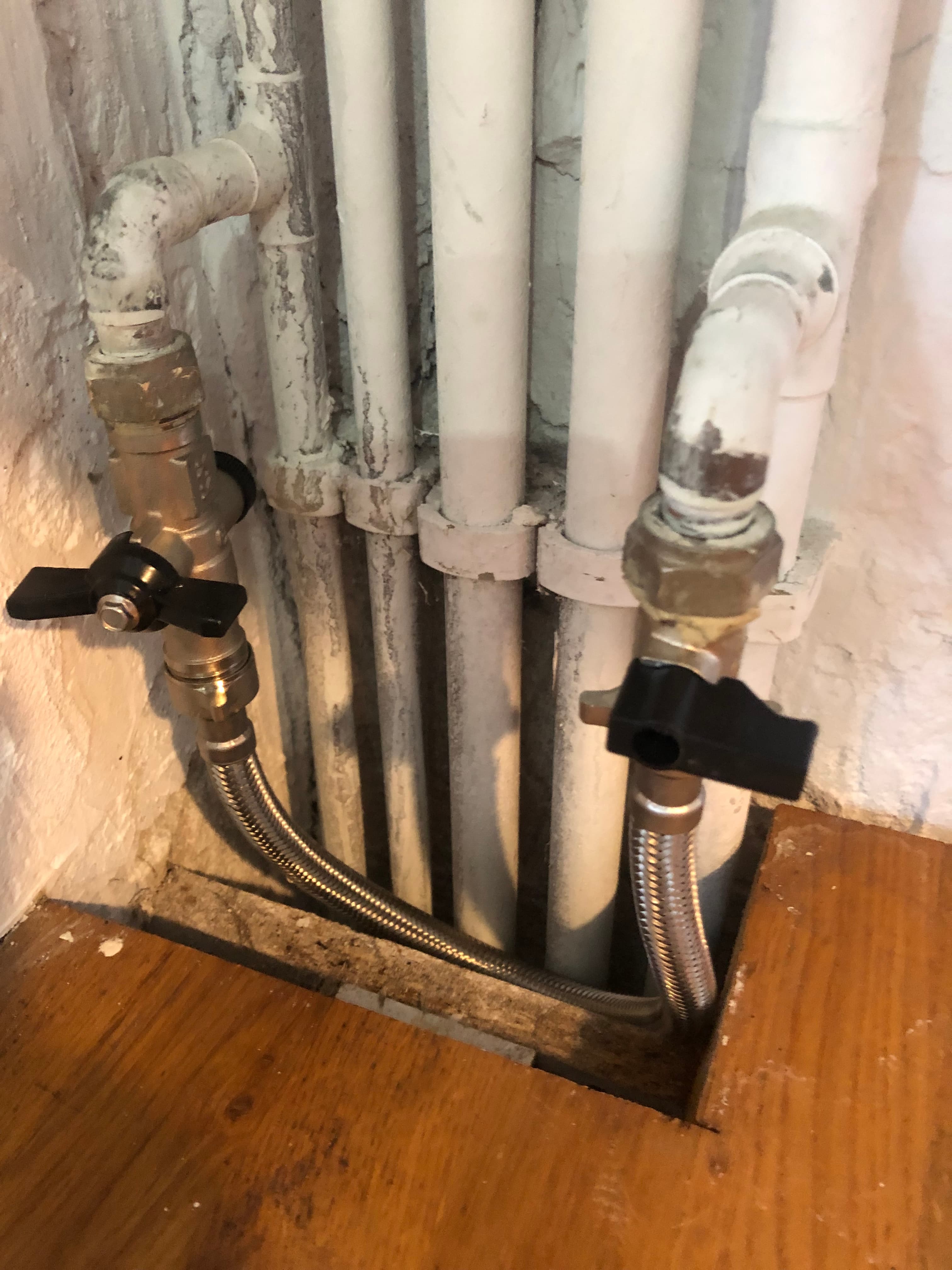 CC BY-SA 4.0
🔍 What it looks like
Usually a short braided stainless steel hose with valves at each end — or permanently fitted with two small isolation valves on the boiler pipework. Some modern boilers have an integrated filling system with a single key.
⚙️ How to use it step by step
1. Check your pressure gauge — should be between 1 and 1.5 bar when cold.
2. Locate the filling loop. Open both valves (slot in line with pipe). You'll hear water entering.
3. Watch the gauge. Stop at 1–1.5 bar.
4. Close both valves fully.
5. Press the boiler reset button. It should fire up normally.
❗ If pressure keeps dropping
Repressurising once or twice a year is normal. If you're doing it monthly, there is a leak somewhere in the system. A plumber should investigate — common causes include a weeping radiator valve, a failing expansion vessel, or a dripping PRV.
Engineer's tip: Always repressurise with the boiler cold (turned off and fully cooled). Adding cold water to a hot system is harder to gauge and can cause thermal shock.
Was this helpful?
General guidance only — not a substitute for professional advice. Always consult a qualified engineer if you are unsure. Gas work must only be carried out by a Gas Safe registered engineer. Unvented (pressurised) hot water systems must be worked on by a G3-qualified engineer. We accept no liability for any loss, damage, or injury arising from the use of this information.