Water dripping from the pressure relief valve
Check the steps below first — if you're not confident, get it fixed safely today.
Post a job — we'll find you an engineer →⚠️ Never block or cap the pressure relief valve pipe — it is a safety device.
A dripping pressure relief valve is your boiler's way of telling you something isn't right with your heating system. This small but vital safety device sits on your boiler and releases water when internal pressure builds up to dangerous levels — think of it as a pressure cooker's safety valve. Most homeowners notice this problem during winter when the heating's in regular use, or after the system's been topped up with water. The good news is that a few drips doesn't mean an emergency, but it does mean your system needs attention from someone qualified. This guide walks you through spotting the problem, understanding what's caused it, and knowing exactly when to call a Gas Safe engineer to put things right.
Not sure if this matches your problem?
Use our interactive tool — answer a few questions and get a personalised diagnosis.
Most likely cause & what to check
Look at the pressure gauge on your boiler — it should be between 1 and 1.5 bar. If it's above 3 bar, that's why the valve is dripping (it's releasing dangerous over-pressure).
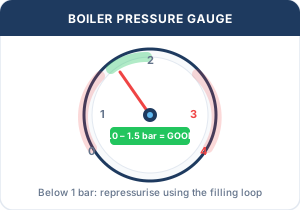
Do not try to fix this yourself. A dripping pressure relief valve means something inside the heating system is causing pressure to build up — this needs a Gas Safe engineer.
Call a Gas Safe engineer. Tell them: "Water is dripping from my pressure relief valve pipe outside. My boiler pressure gauge reads [give them the number]."
Not confident doing this yourself?
Post the job and we'll match you with vetted local engineers. Free, no obligation.
🛠 Tools & materials you may need
Was this guide helpful?
Frequently asked questions
Is it dangerous if water keeps dripping from the pressure relief valve?
A dripping valve is a warning sign rather than an immediate danger — it's actually doing its job by releasing excess pressure. However, the underlying cause (usually a faulty expansion vessel or stuck diverter valve) does need professional attention, as continued pressure build-up can damage your boiler and heating pipework.
How much dripping is normal from a pressure relief valve?
Occasional drips during or just after heating up is fairly normal, especially if your system has just been refilled. Steady dripping that continues throughout the day, or pooling water beneath the external pipe, definitely warrants a call to a Gas Safe engineer.
Can I just cap off the pressure relief valve to stop the dripping?
No — capping or blocking this valve is dangerous and could lead to pressure building up inside your boiler, potentially causing serious damage or even a rupture. The valve must always remain clear and functional, as it's your system's safety mechanism.
What causes excessive pressure in a heating system?
The most common culprit is a failed expansion vessel (the small tank that absorbs pressure as water heats and expands), or occasionally a stuck diverter valve or failed check valve. Less often, it's simply a system that's been over-pressurised during a recent top-up, which a qualified engineer can adjust.
Will I need a new boiler if the pressure relief valve is dripping?
Not necessarily — most dripping valve issues are caused by replaceable components like an expansion vessel or a valve that's stuck with limescale, both of which are usually straightforward and affordable repairs for a Gas Safe engineer.
Should I turn off my boiler if the pressure relief valve is dripping?
You can switch to a lower setting or turn it off if the dripping is heavy and continuous, but gentle dripping doesn't require emergency shutdown. Either way, arrange an engineer visit within a few days to diagnose the root cause.