Filling loop is dripping or leaking
Check the steps below first — if you're not confident, get it fixed safely today.
Post a job — we'll find you an engineer →A leaking filling loop is one of those problems that looks more alarming than it actually is. The filling loop is the braided hose tucked underneath your boiler—it's there to top up your heating system's pressure when it drops, which happens naturally over time. Water dripping or pooling beneath it is usually caused by either the isolation valves not being fully closed, or the hose itself becoming worn. It's a common issue in older systems and properties with slightly worn equipment, and the good news is that it's straightforward to diagnose and fix. This guide walks you through checking the valves yourself and knowing when to ring a plumber, so you can tackle it with confidence. If you've confirmed the valves are closed and water's still coming out, a professional visit is the right call—but it's rarely an emergency.
Not sure if this matches your problem?
Use our interactive tool — answer a few questions and get a personalised diagnosis.
Most likely cause & what to check
The filling loop is the braided flexible hose under the boiler used to top up the pressure. Look at both ends — check whether the small valves (taps) are fully closed. If a valve handle is in line with the pipe, it's open and needs turning 90° to close.
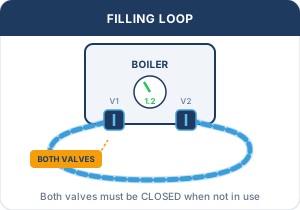
If the hose itself is dripping or the valves won't close properly, this needs replacing — it's a simple job for a plumber.
Call a plumber. Tell them: "My boiler filling loop is leaking — I've checked the valves are closed but it's still dripping."
Not confident doing this yourself?
Post the job and we'll match you with vetted local engineers. Free, no obligation.
Was this guide helpful?
Frequently asked questions
How do I know if my filling loop is actually leaking?
Look underneath your boiler for water pooling or dripping onto the floor or the surface below. The filling loop is the braided flexible hose—it's usually about the thickness of a garden hose and runs from the boiler down to two small tap-like valves. If you see moisture around those valves or the hose itself, you've found the problem.
Is a dripping filling loop dangerous?
A slow drip isn't immediately dangerous, but it does mean your boiler's pressure will drop gradually, which can affect heating performance. Left unattended, it could eventually cause your boiler to lose pressure completely and shut down, but it won't cause an emergency like a gas leak would.
Can I just ignore a leaking filling loop?
You shouldn't ignore it long-term because you'll keep losing pressure and your heating may cut out. However, a very slow drip isn't urgent—you've got time to book a plumber during normal hours rather than calling an emergency engineer.
Why does my filling loop keep dripping even though I've closed the valves?
If the valves are fully closed (handle turned 90° to the pipe direction) and water's still dripping, either the valve seals are worn and won't hold, or the hose itself has a pinhole leak. Either way, the hose assembly needs replacing—it's a straightforward job, but it does require a plumber to do it safely.
How much does it cost to fix a leaking filling loop?
A filling loop replacement typically costs between £80–£150 including parts and labour, depending on your location and whether your engineer needs to drain the system first. It's worth getting a quote from your local plumber, but it's generally one of the cheaper boiler repairs.
What's the difference between the two valves on a filling loop?
Both valves do the same job—isolating the filling loop from the system. You need to close both fully to stop water flowing through the hose. If only one valve closes properly, or if you're unsure which way is 'closed', your plumber can show you during their visit.