Noisy central heating pump
Check the steps below first — if you're not confident, get it fixed safely today.
Post a job — we'll find you an engineer →⚠️ Turn off the heating before touching the pump.
A noisy central heating pump can be unsettling, but it's usually fixable without calling an engineer. The pump is the heart of your heating system—it circulates hot water around your radiators—and when it starts whirring, grinding, or gurgling, it's telling you something needs attention. Most of the time, the culprit is trapped air in the system or the pump running at too high a speed, both of which are straightforward to sort. Occasionally, a pump makes noise because it's genuinely worn out and needs replacing, but even then, it's a job any competent heating engineer can handle quickly. This guide walks through the most common causes and how to diagnose which one you're dealing with—so you'll know whether this is a five-minute fix or when it's time to ring a professional.
Not sure if this matches your problem?
Use our interactive tool — answer a few questions and get a personalised diagnosis.
Most likely cause & what to check
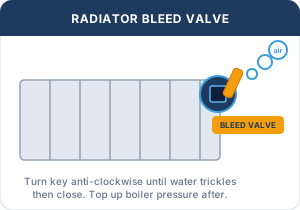
A gurgling or rushing sound is usually trapped air. Bleed all radiators and check the boiler pressure is between 1 and 1.5 bar — this often resolves it.
Look at the pump (a silver or white cylindrical unit, usually near the boiler). If it has a dial showing speeds 1, 2, 3, try turning it to a lower setting.
If the pump is making a grinding or high-pitched squealing sound, it is failing and needs replacing. Call a heating engineer. Tell them: "My central heating pump is making a [describe] noise."
Not confident doing this yourself?
Post the job and we'll match you with vetted local engineers. Free, no obligation.
🛠 Tools & materials you may need
🔗 Some links above are affiliate links — if you buy through them we earn a small commission at no extra cost to you. This keeps the site free.
Was this guide helpful?
Frequently asked questions
Is a noisy central heating pump dangerous?
No, a noisy pump itself isn't dangerous, but it's a sign something needs attention. The main risk is if the underlying cause—like low water pressure or trapped air—damages the pump over time, so it's worth addressing promptly rather than ignoring it.
How much does it cost to replace a central heating pump?
A new pump typically costs £200–£500 depending on the type and your boiler, plus labour which is usually £150–£300 for fitting. Getting a couple of quotes from local heating engineers will give you the most accurate figure for your home.
Can I bleed my radiators myself, or do I need a plumber?
Bleeding radiators is straightforward and you can definitely do it yourself—you just need a radiator bleed key (about £3–£5 from any plumber's merchant) and a small cloth. Open the bleed valve at the top of each radiator slightly until water comes out, then close it again; it takes minutes per radiator.
Why is my boiler pressure dropping and causing the pump noise?
Low pressure is usually caused by a slow leak somewhere in the system, or sometimes by bleeding air out without topping the system back up. Check around pipe joints, radiator valves, and the boiler itself for drips; if you can't spot a leak, your heating engineer will need to pressurise the system and investigate.
Should I turn my heating pump to speed 1 or 3?
Most homes run fine on speed 1 or 2; speed 3 is only needed if you have a very large property or poor circulation. Running at a lower speed reduces noise, saves energy, and puts less stress on the pump, so it's worth trying a lower setting first if your heating still reaches all radiators.
What's the difference between air in the system and a failing pump?
Trapped air usually sounds like gentle gurgling or rushing water, and it'll go away after you bleed the radiators. A failing pump typically makes a high-pitched squeal or grinding sound that won't improve, and it may get worse over days or weeks—that's when replacement is needed.