Zone valve stuck or not opening
Check the steps below first — if you're not confident, get it fixed safely today.
Post a job — we'll find you an engineer →⚠️ Turn off the boiler before touching any valves.
Zone valves are the unsung heroes of your heating system — they sit quietly near your boiler or cylinder, directing hot water to either your radiators or your taps on demand. When one gets stuck or refuses to open, you'll typically notice that one part of your home stays cold whilst the rest warms up nicely, or your hot water simply won't come on. This problem is surprisingly common, especially in systems that are five years old or more, and it usually points to a failed motorised valve rather than anything catastrophic. The good news is that zone valves are straightforward to diagnose and relatively straightforward to fix once you know what you're looking for. This guide walks you through identifying whether the valve itself is stuck or whether the small motor driving it has given up the ghost — a distinction that makes all the difference when it comes to calling in a professional.
Not sure if this matches your problem?
Use our interactive tool — answer a few questions and get a personalised diagnosis.
Most likely cause & what to check
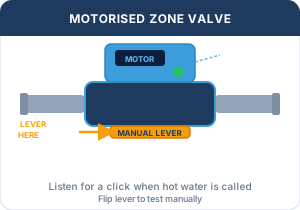
A zone valve (motorised valve) is a box with a small motor on it, usually found near the boiler or hot water cylinder. It controls whether heating or hot water flows.
Look for a small lever on the side of the valve body — it may be white, grey, or yellow. Turn off the boiler first, then try flipping the lever to open manually. If the zone starts working, the motor has failed but the valve itself is fine.
This is a job for a Gas Safe engineer or plumber. Tell them: "I think my zone valve motor has failed — it works on manual override but not automatically."
Unlock the full step-by-step guide
This guide has more steps written by a qualified plumbing and heating engineer — subscribe to see them all and save yourself a costly call-out.
Frequently asked questions
How do I know if it's a zone valve problem and not something else?
The clearest sign is that one zone of your heating (say, upstairs radiators or just hot water) stops responding whilst the other zones work fine. Listen near your boiler or cylinder when the heating calls for that zone — a working motorised valve usually makes a faint buzzing or clicking sound as it opens, so silence is a red flag. If nothing responds at all when you adjust your thermostat or controls, the valve is likely stuck.
Why do zone valves fail and how long do they usually last?
Zone valve motors typically last 5-10 years depending on how often they're used and the quality of your system's water treatment. They fail because the small motor gears inside wear out, or sometimes because mineral deposits clog the valve if your water is hard. Once the motor fails, the valve itself is often still perfectly fine — it's just the electrical bit that's packed in.
Is it safe to manually override a zone valve myself?
It's safe to flip the manual override lever to test whether the valve works when forced open, but always turn the boiler off first as a precaution. Do not force the lever if it won't budge — gentle persuasion only — and remember this is just a diagnostic test, not a permanent fix. You'll still need a professional to sort the motor or replace the valve properly.
Can I carry on using my heating if a zone valve is stuck?
You can limp along for a while if you manually override the valve, but this only works if you don't mind constantly switching between heating and hot water manually. It's not reliable as a long-term solution, and you're at risk of the valve sticking further or causing damage to other parts of the system. Book an engineer sooner rather than later — a replacement motorised valve usually takes an hour or two and costs far less than emergency callout fees later.